Balanced Scorecard Basics
What Is a Balanced Scorecard?
- Communicate what they are trying to accomplish
- Align daily work with strategy
- Prioritize projects, products, and services
- Measure and monitor progress towards strategic targets
The term “balanced” refers to the inclusion of strategic measures in addition to traditional financial measures to get a more complete view of organizational performance.
Originally developed as a performance measurement tool, the BSC has evolved into a comprehensive framework for managing strategy. One of its key strengths is its ability to “connect the dots” across the organization—linking individual and team activities, performance metrics (KPIs), strategic objectives, and the organization’s mission and vision in a clear, integrated way.
Who Uses the Balanced Scorecard (BSC)?

The Balanced Scorecard is widely used across businesses, government agencies, and nonprofit organizations around the world. More than half of major companies in the U.S., Europe, and Asia use the BSC, with adoption steadily increasing in the Middle East and Africa as well.
A global study by Bain & Company has consistently ranked the Balanced Scorecard as a widely used management tool worldwide. It has also been recognized by Harvard Business Review as one of the most influential business ideas of the past 75 years.
What Are Balanced Scorecard Perspectives?
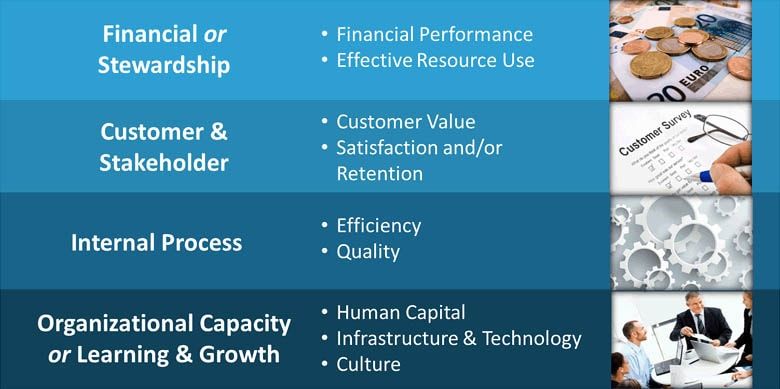
The Balanced Scorecard encourages organizations to view their performance from four key perspectives. These perspectives help guide the development of strategic objectives, key performance indicators (KPIs), targets, and initiatives:
- Financial (or Stewardship): Assesses the organization’s financial performance and how effectively it uses financial resources.
- Customer/Stakeholder: Evaluates performance from the viewpoint of customers or key stakeholders the organization is intended to serve.
- Internal Process: Focuses on the quality and efficiency of internal operations that produce products, deliver services, or drive other critical processes.
- Organizational Capacity (or Learning & Growth): Examines the people, infrastructure, technology, culture, and other capabilities that enable long-term improvement and innovation.
What Are Strategic Objectives?
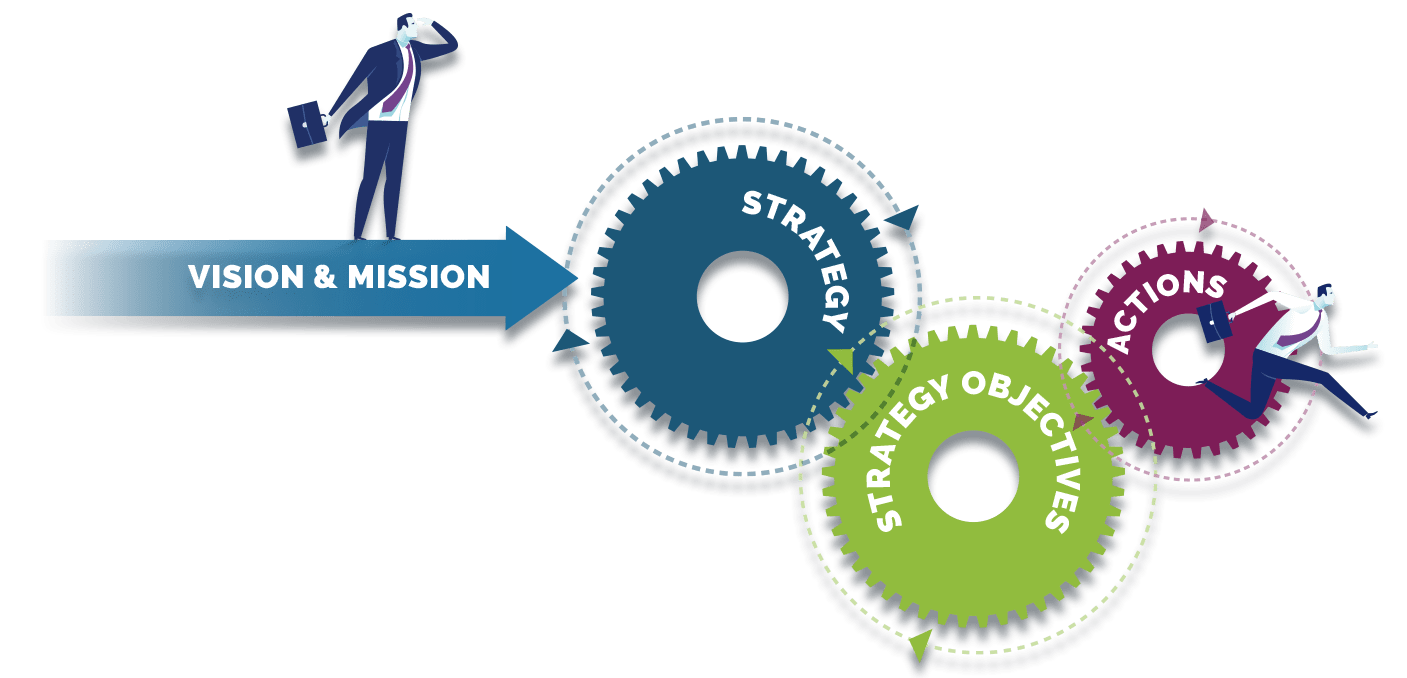
Strategic Objectives are the actions we must implement into our daily activities in order to see improvement in our strategies. They break down abstract concepts like mission and vision into actionable steps.
What Is a Strategy Map?
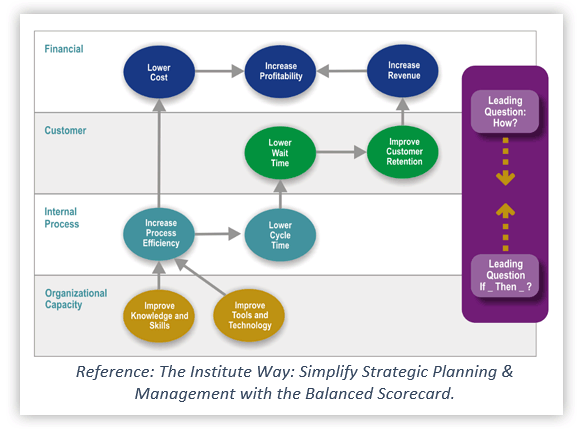
One of the most powerful elements in the BSC methodology is the use of strategy mapping to visualize and communicate how value is created by the organization. A strategy map is a simple graphic that shows a logical, cause-and-effect connection between strategic objectives (shown as ovals on the map).
What Are Performance Measures (KPIs)?
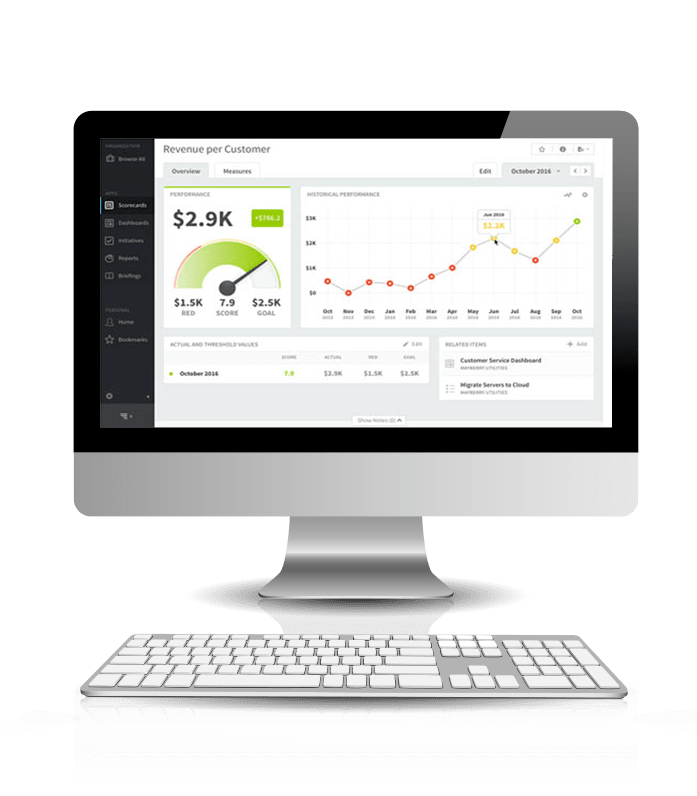
For each objective on the strategy map, at least one measure or Key Performance Indicator (KPI) will be identified and tracked over time. KPIs indicate progress toward a desirable outcome. Strategic KPIs monitor the implementation and effectiveness of an organization’s strategies, determine the gap between actual and targeted performance and determine organization effectiveness and operational efficiency.

What Are Strategic Initiatives?
Strategic Initiatives are projects (new or existing) that are designed to help the organization achieve Strategic Objectives and have significant organization-wide impact. They are managed formally like any other project, meaning they are explicitly defined in terms of owner, schedule, resources needed, action steps, progress, and expected results. Some Strategic Initiatives are short-term (taking only a few days to implement) while others can take years to fully implement. Strategic Project Management is the process of managing projects to achieve strategic success.
What is Cascading?
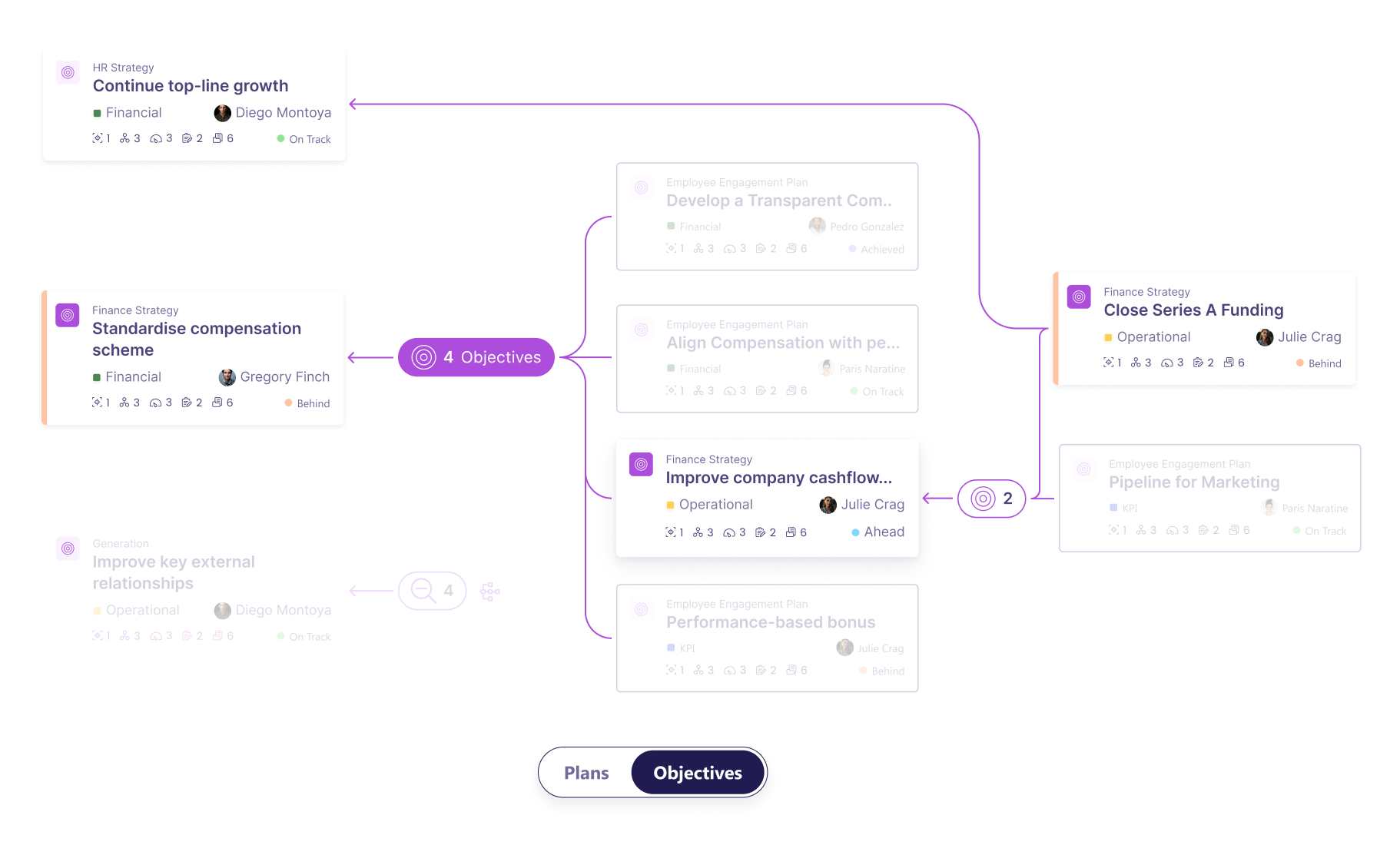
Cascading a Balanced Scorecard involves translating the organization-wide scorecard (Tier 1) into aligned scorecards for business units and departments (Tier 2), and then further down to teams or individuals (Tier 3).
This process ensures that the entire organization is focused on strategy, creating a clear line of sight between daily work and high-level strategic goals. As the scorecard cascades, objectives and performance measures become more specific and operational. Accountability is established at each level by assigning ownership for objectives and measures. This alignment is essential for building a strategy-focused organization.
BSC Automation and Performance Analysis
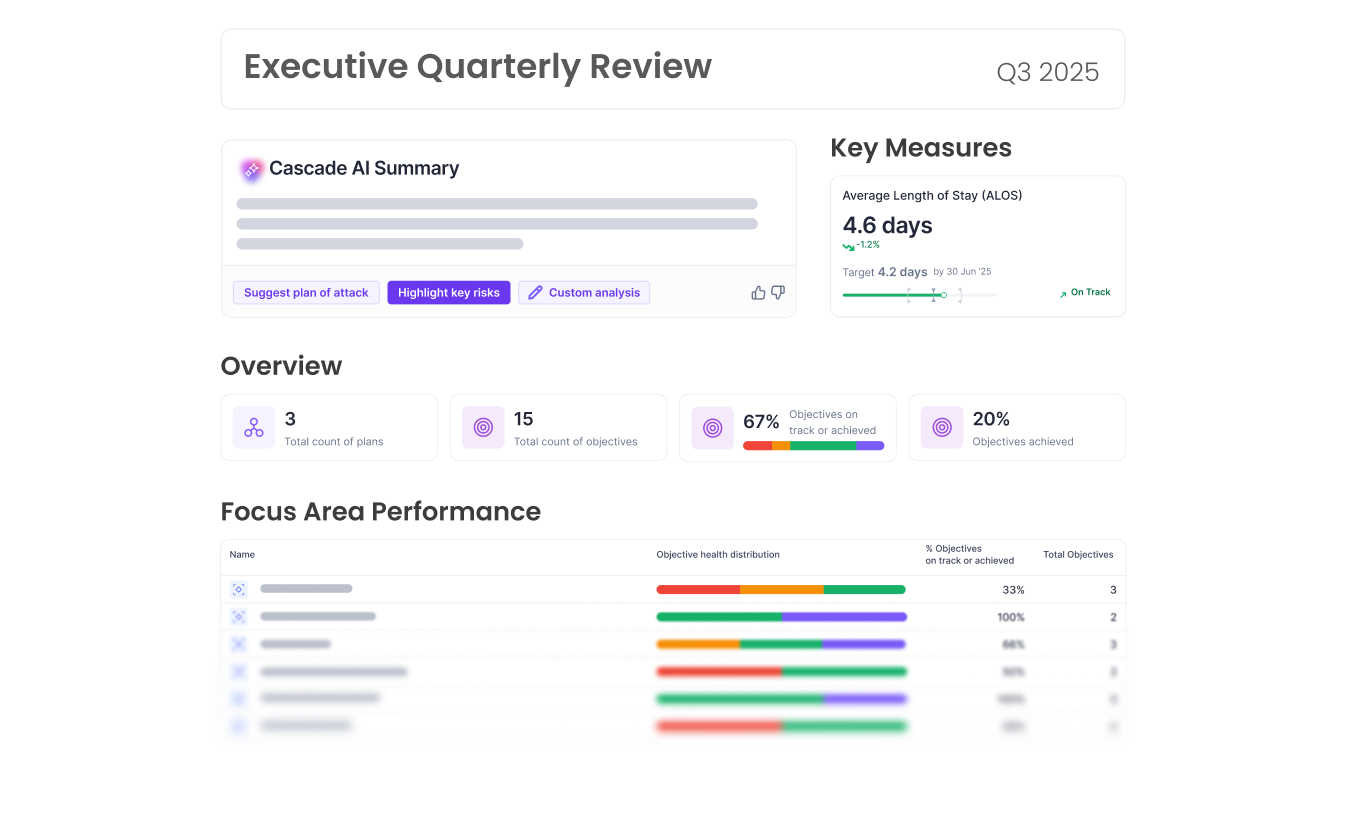
Once a scorecard has been developed and implemented, performance management software can be used to get the right performance information to the right people. Automation adds structure and discipline to implementing the Balanced Scorecard system, helps transform disparate corporate data into information and knowledge, and helps communicate performance information. The Balanced Scorecard Institute formally recommends the Cascade Strategy Platform developed by Cascade and co-marketed by the Institute, as a comprehensive solution for strategy planning, alignment, and execution.
Balanced Scorecard History
The Balanced Scorecard was originally developed by Dr. Robert Kaplan of Harvard University and Dr. David Norton as a framework for measuring organizational performance using a more balanced set of performance measures. Traditionally companies used only short-term financial performance as the measure of success. The “balanced scorecard” added additional non-financial strategic measures to the mix in order to better focus on long-term success. The system has evolved over the years and is now considered a fully integrated strategic management system.
This new approach to strategic management was first detailed in a series of articles and books by Drs. Kaplan and Norton and built on work by Art Schneiderman at Analog Devices. Recognizing some of the weaknesses and vagueness of previous management approaches, the balanced scorecard approach provides a clear prescription as to what companies should measure in order to ‘balance’ the financial perspective.
Kaplan and Norton describe the innovation of the balanced scorecard as follows:
“The balanced scorecard retains traditional financial measures. But financial measures tell the story of past events, an adequate story for industrial age companies for which investments in long-term capabilities and customer relationships were not critical for success. These financial measures are inadequate, however, for guiding and evaluating the journey that information age companies must make to create future value through investment in customers, suppliers, employees, processes, technology, and innovation.”
Strategic Planning

Elevate Your Team with Balanced Scorecard Certification!
BSC-KPI-OKR: The Alphabet of Strategy Management
Acquire Hands-on Strategy Skills You Can Use Right Away!
Nominate your organization for the Institute's Award for Excellence

Explore Our

DISCOUNTS
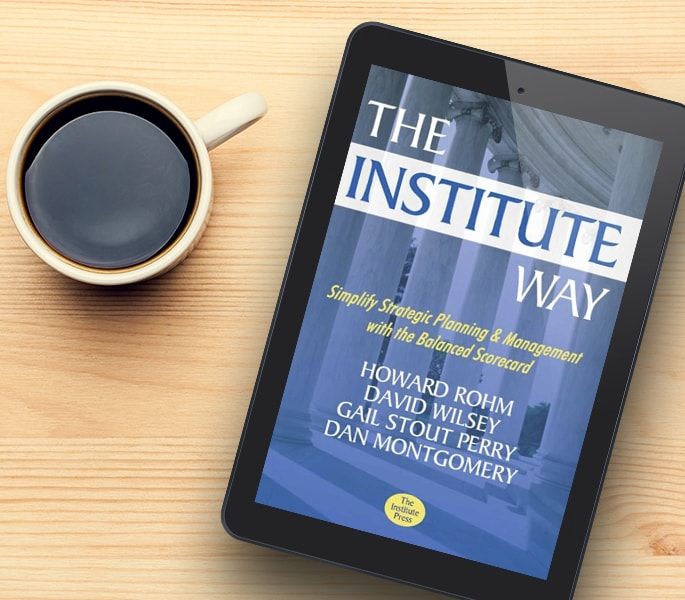
The Institute Way
How to Learn More
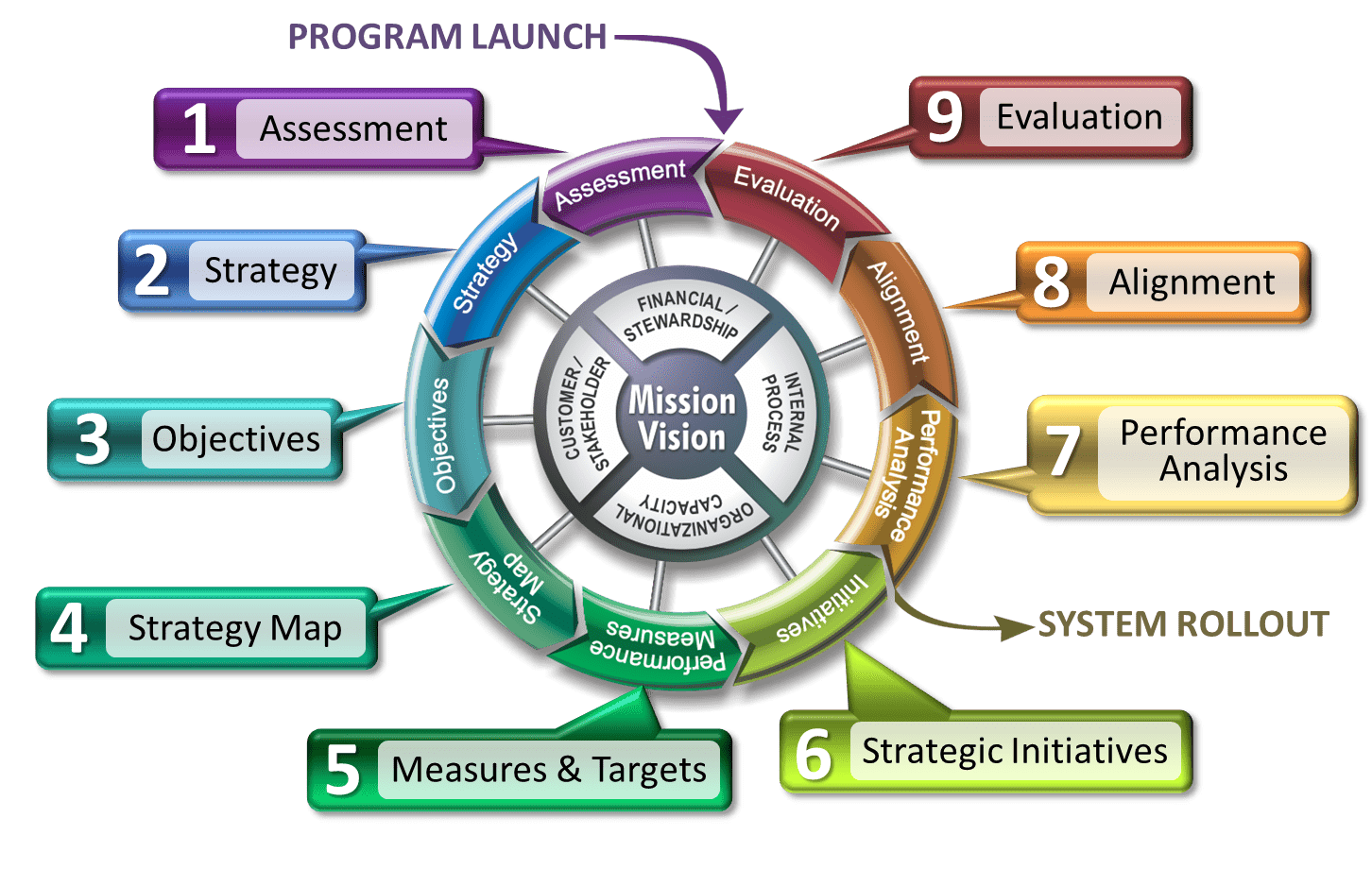
To create a balanced scorecard, BSI recommends learning the Nine Steps to Success™. To learn more about this methodology, see our Professional Certification Programs, which are offered in association with the George Washington University Center for Excellence in Public Leadership, or contact us below with questions or inquiries about consulting services.
Why Choose a Balanced Scorecard Approach?
In today’s complex business environment, organizations struggle with translating strategy into action. A Balanced Scorecard provide a structured, proven framework to align organizational goals, measure performance effectively, and ensure long-term success. Business, government, and nonprofit organizations worldwide use the balanced scorecard system to:
- Clarify Vision & Strategy – Define clear, actionable strategic objectives.
- Align Teams & Resources – Ensure every department and individual contributes to strategic goals.
- Measure What Matters – Identify the right KPIs to track progress and drive continuous improvement.
- Improve Decision-Making – Use data-driven insights to optimize performance.
- Drive Accountability & Engagement – Foster a culture of performance and strategic focus.
Why Choose the Balanced Scorecard Institute?
With over two decades of experience, the Balanced Scorecard Institute (BSI) has empowered organizations worldwide to implement the BSC framework effectively. Our services include:
- Consulting Solutions: Tailored guidance to develop and execute strategic plans
- Training and Certification: Comprehensive programs to build internal expertise
- Software Tools: Innovative solutions to automate and monitor performance metrics
Our proven Nine Steps to Success™ methodology ensures a structured approach to strategy management, fostering alignment and accountability at all organizational levels.
Contact us to find out how we can help you take your strategy to the next level!